


A detailed look at Nemesis Market’s rise as a top darknet marketplace and its fall after a coordinated international law enforcement operation shut it down.
Introduction
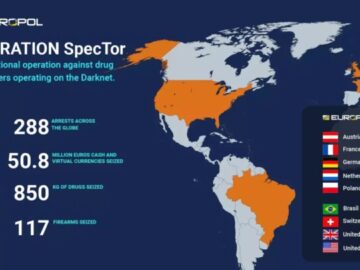
In March 2024, international law enforcement agencies working together seized the infrastructure and shut down Nemesis Market, a prominent darknet marketplace that had operated on the Tor network for more than three years. The takedown marked a significant achievement in the global fight against online drug trafficking, fraud, and other cyber-criminal activity.
What Was Nemesis Market?
Nemesis Market was a darknet marketplace accessible only via anonymizing technology like Tor. Launched around March 2021, the platform quickly grew into a significant hub for illicit trade, offering a variety of illegal goods and services — most notably illegal drugs — along with fraud-related data and cybercrime tools. At its peak, Nemesis hosted over 150,000 registered users and more than 1,100 vendor accounts worldwide.
Investigators described the marketplace as a “borderless powerhouse of criminal activity,” facilitating not only drug trafficking but also trading in stolen financial information, fraudulent IDs, counterfeit currency, malware, and money‑laundering services.
International Operation : How Authorities Seized Nemesis
On March 20, 2024, law enforcement in the United States, Germany, and Lithuania executed a coordinated operation to seize Nemesis’s servers and bring the platform offline. The action followed a joint investigation involving multiple agencies, including the Federal Bureau of Investigation (FBI), Drug Enforcement Administration (DEA), Internal Revenue Service – Criminal Investigation (IRS‑CI), and their European partners.
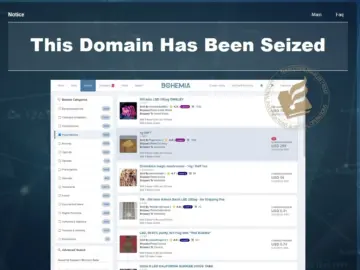
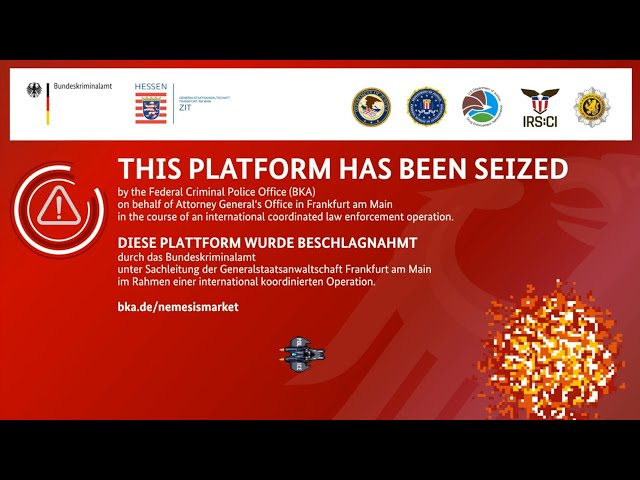
German authorities — including the Federal Criminal Police Office (BKA) and the Frankfurt Cybercrime Combating Unit (ZIT) — seized Nemesis’s server infrastructure located in Germany and Lithuania, effectively shutting the site down and replacing its homepage with a law enforcement seizure banner. During the operation, investigators also confiscated approximately €94,000 in cryptocurrency assets tied to the marketplace.
The collected marketplace data has since been used as the basis for further investigations into the activities of criminal sellers and users once active on the platform.
Scope of Illicit Activity
Nemesis Market was far more than a niche platform. Between 2021 and 2024, it processed hundreds of thousands of orders — more than 400,000 confirmed transactions, according to U.S. Department of Justice filings — that included thousands of orders for stimulants (like methamphetamine and cocaine) and opioids (including fentanyl and heroin).
Authorities even performed undercover purchases of drugs from the platform that were then confirmed by laboratory reports to contain dangerous substances like fentanyl, acetylfentanyl, and other hazardous compounds.
Charges and Sanctions
In April 2025, U.S. prosecutors filed a federal indictment charging Behrouz Parsarad, a 36‑year‑old Iranian national, as the founder and operator of Nemesis Market. Parsarad is charged with conspiracy to distribute controlled substances, money laundering, and distribution of illicit drugs, among other offenses.
Parsarad allegedly built the marketplace with features that helped obscure criminal activity, including money‑laundering services designed to mix cryptocurrency transactions and conceal their origins.
In March 2025, the U.S. Department of the Treasury’s Office of Foreign Assets Control (OFAC) also sanctioned Parsarad and identified dozens of cryptocurrency addresses tied to his operations, blocking U.S. persons from dealing with the sanctioned assets. This marked the first OFAC action taken as part of the FBI‑led Joint Criminal Opioid and Darknet Enforcement (JCODE) Team.
If convicted, Parsarad faces a mandatory minimum sentence of 10 years in federal prison, with a potential maximum of life behind bars.
Impact and Significance
The closure of Nemesis Market represents a major victory for international law enforcement’s efforts to combat darknet‑enabled crime. Though smaller in scale than some marketplaces like Hydra, Nemesis became a significant platform for drug trafficking and other illicit services, contributing an estimated $30 million in drug sales from 2021 through 2024.
By dismantling the infrastructure and blocking continued operations, authorities have disrupted the flow of dangerous drugs, fraud tools, and cybercrime services that once proliferated across the marketplace — a clear signal that even seemingly anonymous criminal networks are vulnerable to coordinated enforcement actions.
Ongoing Investigations
The data and digital evidence seized from Nemesis Market continue to fuel ongoing investigations into individual vendors and users who participated in illegal transactions. Law enforcement officials have pledged to pursue further prosecutions and civil actions where appropriate, leveraging marketplace data to track down offenders across borders.
While the dark web remains a dynamic environment where illicit platforms often re‑emerge, the Nemesis takedown underscores the expanding reach of international cooperation in tackling complex cybercrime ecosystems — and the risks faced by those who think anonymity protects them from accountability.
Reports are sourced from official documents, law-enforcement updates, and credible investigations.
Discover additional reports, market trends, crime analysis and Harm Reduction articles on DarkDotWeb to stay informed about the latest dark web operations.