







The top two privacy coins are under performing both their category and the broader crypto market amid the ongoing slump.
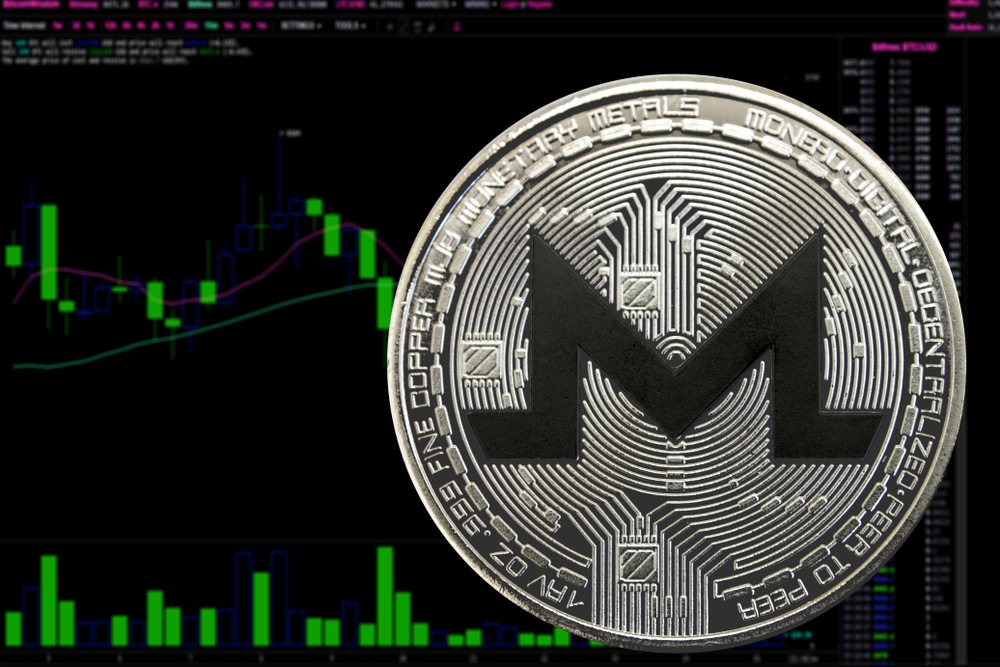
Privacy-focused cryptocurrencies led declines across the digital asset market on Tuesday, falling sharply even as broader losses remained moderate.
Monero (XMR) and Zcash (ZEC) were among the weakest performers in the top 100 by market capitalization, each dropping roughly 8% over the past 24 hours. According to CoinGecko data, their losses outpaced the average decline for privacy coins, which was about 5.8%.
Monero has fallen nearly 20% over the past week, trading around $376 with approximately $125 million in daily volume. The drop follows a mid-January rally that briefly pushed Monero above $680 before reversing. Zcash has declined over 26% in the past week, with 24-hour trading volume around $399 million, after surging past $540 in late December and then retreating through January and early February.
On prediction platform Myriad, owned by Decrypt’s parent company Dastan, users assign only an 18% probability that Zcash will reach $550 before dropping to $250.
“This week’s drawdown in privacy coins appears to be a mix of broader risk-off sentiment and privacy-specific pressures,” said Pavel Nikienkov, co-founder of privacy blockchain Zano.
“When markets become cautious, assets perceived as having ‘regulatory risk’ are often sold first, and privacy coins typically fall into that category regardless of their actual use cases,” he explained. “Additionally, privacy tokens face structural headwinds like delistings and restricted access, which can amplify their losses compared to the wider market.”
Newly listed privacy token Zama, which uses fully homomorphic encryption (FHE), also saw intraday losses of about 19%, mirroring Monero and Zcash.
The selloff highlights ongoing structural challenges for privacy-focused assets, including regulatory pressure and limited exchange access. Over the past three years, several centralized platforms have restricted or delisted privacy coins, citing compliance requirements from regions like the EU—a trend that has affected liquidity and institutional participation.
This raises questions about whether privacy coins are being treated as regulatory liabilities or undervalued features.
“Privacy isn’t losing relevance; it’s actually becoming more essential. Yet the market still treats it as a niche feature rather than core infrastructure,” said Nikienkov. He argued that opt-in privacy models are flawed because privacy is only effective as a network effect: if most users remain transparent, the private subset becomes small, weaker, and more identifiable.
“Default privacy is what makes crypto usable for commerce, payroll, and everyday transactions—no functioning economy can operate on fully public transaction histories,” he added.
Reports are sourced from official documents, law-enforcement updates, and credible investigations.
Discover additional reports, market trends, crime analysis and Harm Reduction articles on DarkDotWeb to stay informed about the latest dark web operations.