







A post-mortem on the Bohemia dark web market seizure, exploring operational failures, law enforcement pressure, and aftermath.
Introduction
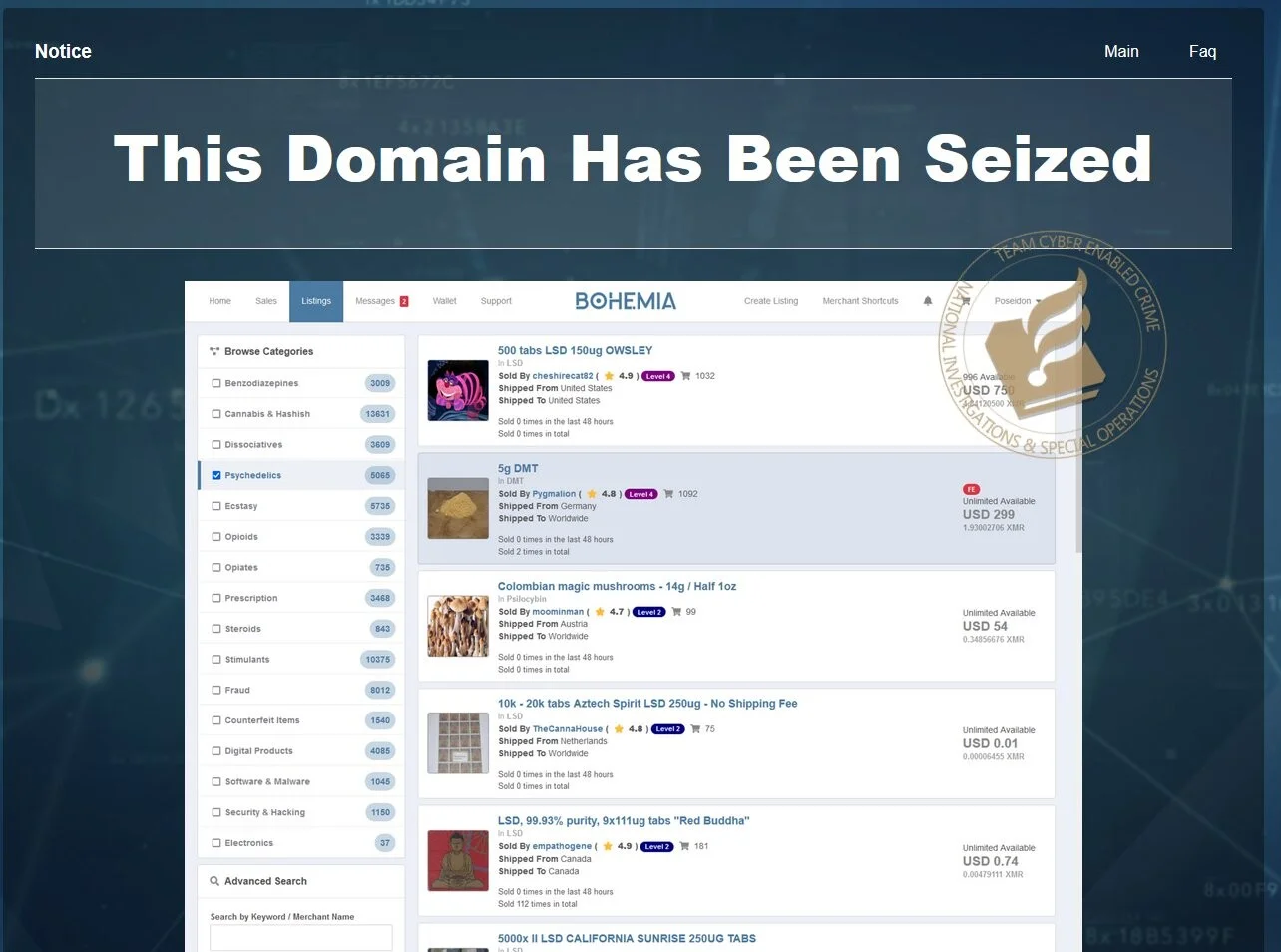
In a major international law enforcement effort, authorities dismantled the Bohemia/Cannabia dark web marketplace. Once considered one of the largest and most persistent darknet markets supporting global illicit trade. The operation culminated in arrests across Europe, the seizure of cryptocurrency, and a definitive interruption of the market’s online presence.
A Marketplace of Scale and Scope
Bohemia Market, along with its sister platform Cannabia, emerged in 2021 and quickly grew into a significant hub on the Tor network for illicit trade. At its peak, the dual marketplace hosted approximately 82,000 advertisements daily, facilitating roughly 67,000 transactions per month across a range of illegal goods and services. In September 2023, records indicate it reached an estimated €12 million in turnover, underscoring its deeply rooted economic activity on the dark web.
The market’s offerings were varied, with a strong emphasis on drug trafficking, particularly cannabis products, alongside ancillary listings for cyber-crime services, including malware and DDoS-for-hire ads. Some listings were reportedly linked to sellers advertising shipments from the Netherlands, drawing focused scrutiny from regional investigators.
From Disruption to Takedown
Investigators from the Dutch National Police had been monitoring the marketplace since late 2022, working in partnership with law enforcement agencies in Ireland, the United Kingdom, and the United States. The probe’s aim was to map the infrastructure supporting Bohemia and Cannabia, identify operators, and ultimately disrupt their activities.
Towards the end of 2023, users began reporting service disruptions and withdrawal issues, sparking speculation of mismanagement or internal conflict among administrators. Independent research suggested that one developer may have acted “rogue,” withdrawing funds over a period of time before the market ultimately went offline. Events that some observers characterized as an exit scam, a common fate for darknet marketplaces.
However, the closure did not mark an end to scrutiny. Law enforcement had already leveraged data gathered during the investigation to identify and track persons of interest.
Arrests and Seizures
In June 2024, a 20-year-old British national was arrested by Dutch authorities at Amsterdam’s Schiphol Airport. Around the same period, a 23-year-old Irish citizen was detained by Ireland’s Garda National Cyber Crime Bureau as part of the joint operation. Both individuals were alleged administrators of the marketplace and appeared in subsequent court proceedings.
During the arrests, police seized more than €8 million (approximately $8.7M) in cryptocurrency believed connected to the operation. In addition to digital assets, law enforcement took control of vehicles and electronic devices that reportedly contained incriminating data and access keys to wallets tied to the marketplace.
Dutch prosecutors have characterized the arrests and seizures as a significant blow to operators who profited from the platform’s widespread illegal activity. Analysis by the Police also suggests that administrators may have realized millions of euros in profit prior to the market’s downfall.
Aftermath and Ecosystem Response
The take-down of Bohemia/Cannabia has had ripple effects across darknet forums and intelligence channels. Users displaced by the shutdown sought alternative markets, while cyber-crime researchers have noted that the marketplace’s closure reinforces persistent questions about anonymity and accountability in hidden services.
Despite the operational disruption, the broader hidden-service ecosystem has continued to adapt. Markets with similar features have gained activity as displaced vendors and buyers migrate, reflecting a pattern seen in past seizures: individual platforms are eliminated, but underlying demand remains resilient and transient.
Law Enforcement Perspective
Officials involved in the investigation have emphasized that dark web anonymity is neither absolute nor impenetrable. Statements from the Police underscore that coordinated surveillance, data analysis, and international cooperation were critical in mapping Bohemia’s infrastructure and advancing the case.
In remarks attributed to operation leadership, authorities reiterated that actors engaging in illegal markets, whether administrators, sellers, or buyers should not assume they are beyond reach. Investigative techniques and cross-border collaboration, they say, continue to expose hidden networks and bring key figures to justice.
A Continuing Narrative
The seizure of Bohemia/Cannabia adds another chapter to the ongoing struggle between darknet markets and law enforcement. As with previous takedowns from Silk Road to later iterations like Empire and AlphaBay, the life cycle of Bohemia reflects both the scale of illicit demand online and the persistent efforts of global authorities to counter it.
While the platform itself is now offline and its administrators in custody, the broader dynamics of underground marketplaces show no signs of slowing down. A pattern that will remain central to future reporting and analysis on hidden services.
Reports are sourced from official documents, law-enforcement updates, and credible investigations.
Discover additional reports, market trends, crime analysis and Harm Reduction articles on DarkDotWeb to stay informed about the latest dark web operations.