







Part 6 of 7 — A Weekly Sunday Exclusive Series
Carlos Lehder helped build the Medellín Cartel’s cocaine air routes, turning Norman’s Cay into a major hub for drug trafficking to the U.S.
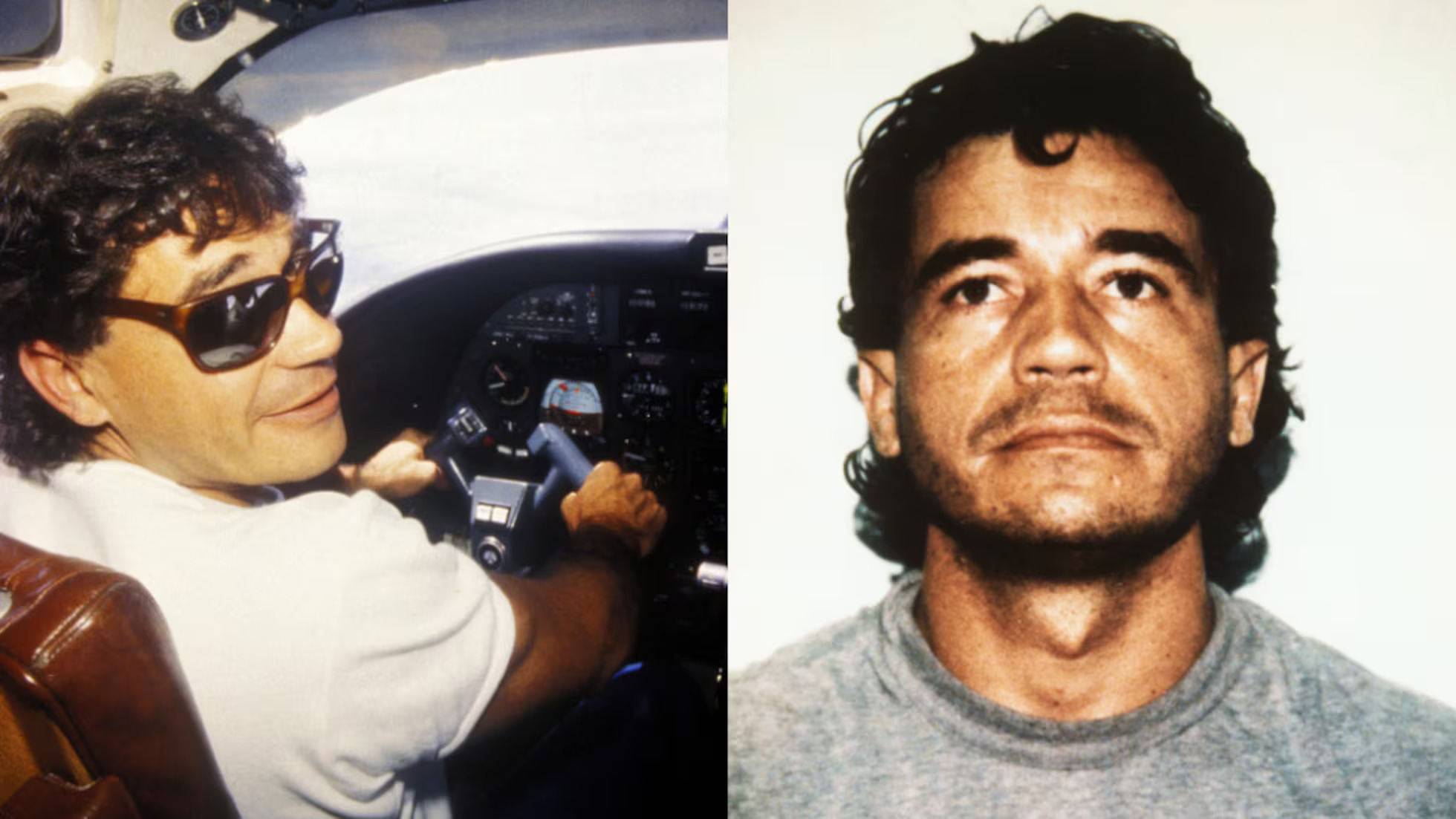
Carlos Lehder – The Cocaine Airlord
During the early expansion of the cocaine trade in the late 1970s and early 1980s, few figures were as instrumental in transforming smuggling logistics as Carlos Lehder. A founding member of the Medellín Cartel, Lehder helped develop a trafficking model that dramatically increased the amount of cocaine entering the United States.
By exploiting Caribbean geography and aviation networks, he turned remote island airstrips into key transit hubs for cartel shipments. His innovations helped turn cocaine trafficking into a large-scale international enterprise.
Carlos Enrique Lehder Rivas was born in 1949 in Armenia, Colombia, to a Colombian mother and a German father. His upbringing exposed him to both cultures, and he spent time living in the United States during his youth.
Lehder first became involved in criminal activity through small-scale operations such as car theft and marijuana smuggling. While serving time in a U.S. prison during the 1970s, he met fellow trafficker George Jung. The two reportedly discussed the growing demand for cocaine and the opportunities it presented.
These early connections helped set the stage for Lehder’s later involvement with the Medellín Cartel.
By the late 1970s, Lehder had become closely associated with the emerging Medellín Cartel, working alongside figures such as Pablo Escobar. At the time, cocaine demand in the United States was increasing rapidly, but the logistics of transporting large quantities remained challenging.
Lehder focused on solving that problem.
He recognized that air transportation could dramatically increase shipment volumes while reducing reliance on traditional smuggling routes. His strategy would soon reshape the cocaine trade.
Lehder’s most significant innovation came with the development of a trafficking hub on Norman’s Cay, a small island in the Bahamas located roughly 200 miles from the coast of Florida.
The island became a staging ground where planes loaded with cocaine from Colombia could land, refuel, and transfer cargo before continuing toward the United States.
This system allowed traffickers to move far larger quantities than before. Small aircraft could make repeated trips between Colombia, the Bahamas, and Florida, creating a highly efficient distribution pipeline.
At its peak, some estimates suggested that large portions of the cocaine entering the United States passed through Caribbean transit routes influenced by Lehder’s operations.
As the Medellín Cartel expanded, Lehder’s logistical expertise made him an important figure within the organization. His operations helped scale the cartel’s trafficking capacity, contributing to the rapid growth of the cocaine market in the United States during the early 1980s.
Lehder was also known for his flamboyant lifestyle and outspoken personality. Unlike some traffickers who preferred to remain out of public view, he occasionally appeared in the spotlight and even attempted to establish political influence in Colombia.
He supported nationalist political ideas and briefly gained attention through anti-extradition activism, opposing the transfer of Colombian drug traffickers to U.S. courts.
In 1987, Lehder was captured by Colombian authorities and extradited to the United States, one of the earliest major extraditions of a Colombian cartel figure. He was later convicted on multiple drug trafficking charges in U.S. federal court and initially received a life sentence plus additional years in prison.
Over time, Lehder’s sentence was reduced after cooperating with U.S. authorities in investigations involving other international criminal networks. After decades in prison, Lehder was eventually released in 2020 and returned to Germany due to his German citizenship.
His life story reflects a pivotal era in the history of organized crime, when cocaine trafficking evolved from scattered smuggling operations into sophisticated international networks. Carlos Lehder’s influence lies primarily in logistics. By transforming Caribbean islands into aviation hubs, he demonstrated how geography, infrastructure, and planning could dramatically expand the scale of drug trafficking.
His innovations helped lay the groundwork for the global narcotics supply chains that would later be adopted by other criminal organizations.
While many figures in the cocaine trade became known for violence or wealth, Lehder’s lasting impact came from strategy, particularly his role in turning aviation into one of the most effective tools in cartel operations.
Did you know… Norman’s Cay?
Carlos Lehder reportedly transformed the quiet Bahamian island of Norman’s Cay into a major cocaine transit point during the early 1980s, using it as a refueling hub for cartel aircraft flying toward the United States.
Next week…
Part 7 of 7 — Frank Lucas: America’s Heroin Kingpin
Reports are sourced from official documents, law-enforcement updates, and credible investigations.
Discover additional reports, market trends, crime analysis and Harm Reduction articles on DarkDotWeb to stay informed about the latest dark web operations.