







Learn about dangerous drug interactions and high-risk drug combinations. This harm reduction guide explains overdose risks, warning signs, and safer practices.
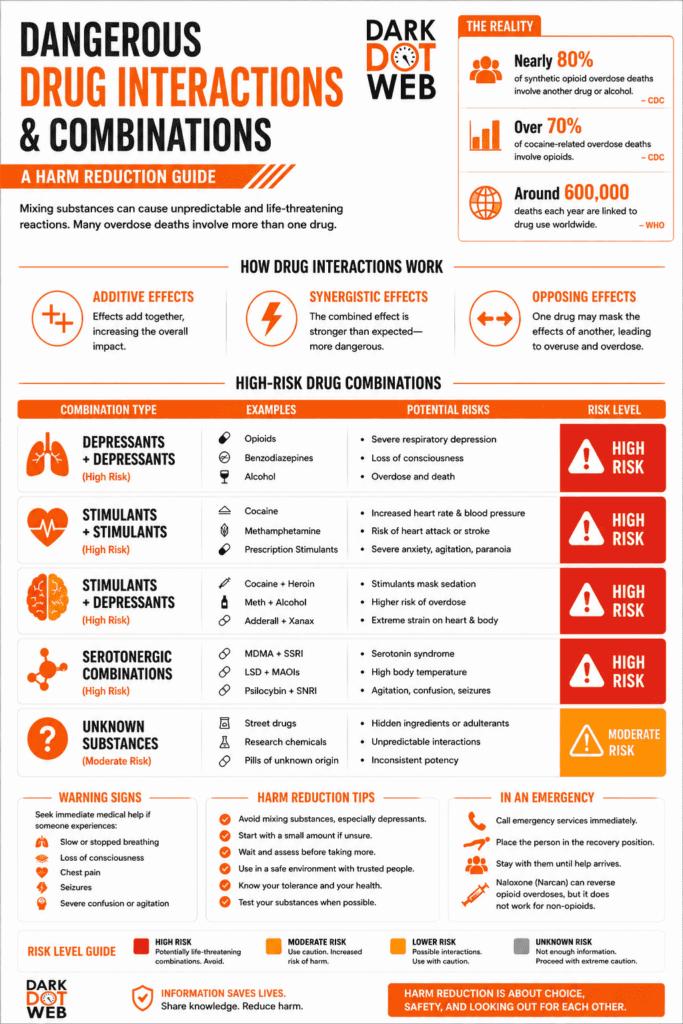
Every year, hundreds of thousands of people worldwide experience severe medical emergencies linked to drug interactions and polysubstance use. Many of these incidents occur because substances are combined without fully understanding how they affect the body together.
While some combinations may seem common or manageable, mixing substances can dramatically increase the risk of overdose, heart complications, respiratory failure, seizures, and long-term health damage.
Understanding these risks is one of the most important aspects of harm reduction.
What Are Drug Interactions?
Drug interactions occur when two or more substances affect the body at the same time. These interactions can alter how substances behave in the brain and body, often producing stronger or more dangerous effects than expected.
In many cases, the danger comes not from a single substance, but from how multiple substances interact together.
According to the Centers for Disease Control and Prevention, a large percentage of overdose deaths involve more than one substance, particularly combinations involving opioids, stimulants, alcohol, or benzodiazepines.
How Drug Interactions Work
Drug interactions generally fall into three categories:
Additive Effects
Two substances produce similar effects that combine together.
Example:
- Two depressants may significantly increase sedation and breathing suppression.
Synergistic Effects
The combined effect becomes stronger than expected.
This is especially dangerous because:
The interaction may overwhelm the body rapidly
Warning signs can appear suddenly
Overdose risk increases significantly
Opposing Effects
Some substances produce opposite effects, creating the illusion that they “balance out.”
In reality:
- One substance may mask the effects of another
- Users may consume more than intended
- The body experiences severe stress
This is commonly seen when stimulants and depressants are mixed.
High-Risk Drug Combinations
Depressants + Depressants
One of the most dangerous combinations involves central nervous system depressants.
Examples include:
- Opioids
- Benzodiazepines
- Alcohol
These substances slow breathing and heart rate. Combined use can lead to Respiratory depression, unconsciousness, and fatal overdose.
Even doses that might be tolerated individually can become life-threatening together.
Stimulants + Stimulants
Combining stimulants places extreme strain on the cardiovascular system.
Potential risks include:
- Elevated blood pressure
- Rapid heart rate
- Severe anxiety and agitation
- Increased risk of stroke or heart attack
The risk increases further when purity and dosage are unknown.
Stimulants + Depressants
Sometimes referred to as “speedballing,” this combination is especially unpredictable.
Examples may include:
- Cocaine + heroin
- Methamphetamine + alcohol
- Prescription stimulants + sedatives
These combinations are dangerous because:
- Stimulants can temporarily mask sedation
- Users may consume more than intended
- The heart and nervous system receive conflicting signals
This pattern is strongly associated with overdose risk.
Serotonergic Combinations
Some substances affect serotonin levels in the brain. When combined, they can trigger Serotonin syndrome, a potentially life-threatening condition.
Symptoms may include:
- Agitation
- Rapid heartbeat
- High body temperature
- Confusion
- Seizures
Immediate medical attention may be necessary.
Unknown Substances Increase Risk
In unregulated markets, substances may contain:
- Unexpected compounds
- Hidden adulterants
- Misrepresented ingredients
- Unknown potency
This makes interactions even more unpredictable.
According to public health organizations, many overdoses now involve substances people did not knowingly consume, including synthetic opioids and adulterants mixed into other drugs.
Warning Signs of a Dangerous Interaction
Seek emergency medical help immediately if someone experiences:
- Slow or stopped breathing
- Loss of consciousness
- Chest pain
- Seizures
- Severe confusion or agitation
- Blue lips or fingertips
These may indicate overdose or a severe drug interaction.
Harm Reduction Practices
While no substance use is completely risk-free, some practices may help reduce harm:
- Avoid mixing substances whenever possible
- Be cautious with depressants
- Start with smaller amounts if uncertainty exists
- Avoid re-dosing quickly
- Stay with trusted people
- Test substances when possible
- Stay hydrated and monitor physical condition
Drug checking and reagent testing can also help identify unexpected substances, though they cannot guarantee safety.
In an Emergency
If someone becomes unresponsive or experiences signs of overdose:
- Call emergency services immediately
- Place the person in the recovery position
- Stay with them until help arrives
The medication Naloxone can reverse opioid overdoses, but it will not reverse overdoses caused solely by stimulants or other non-opioid substances.
Why Harm Reduction Matters
Accurate information saves lives.
Many people are unaware of how dangerous certain combinations can become, especially when substances are mislabeled or contaminated. Harm reduction is not about encouraging use. It is about reducing preventable injuries, overdoses, and deaths through education and awareness.
Understanding drug interactions can help people make safer, more informed decisions and recognize emergencies before it is too late.
Related articles :
- Naloxone: How It Reverses Opioid Overdoses
- Mixing alcohol with other drugs: what you should know
- Harm Reduction: Safer Choices, Healthier Lives
This article is part of DarkDotWeb’s Harm Reduction series. Our goal is to provide evidence-based information that helps reduce preventable harm, encourages informed decision-making, and supports people without judgement.