








Learn why mixing drugs increases overdose risk, how common drug interactions occur, and practical harm reduction strategies to reduce preventable harm.
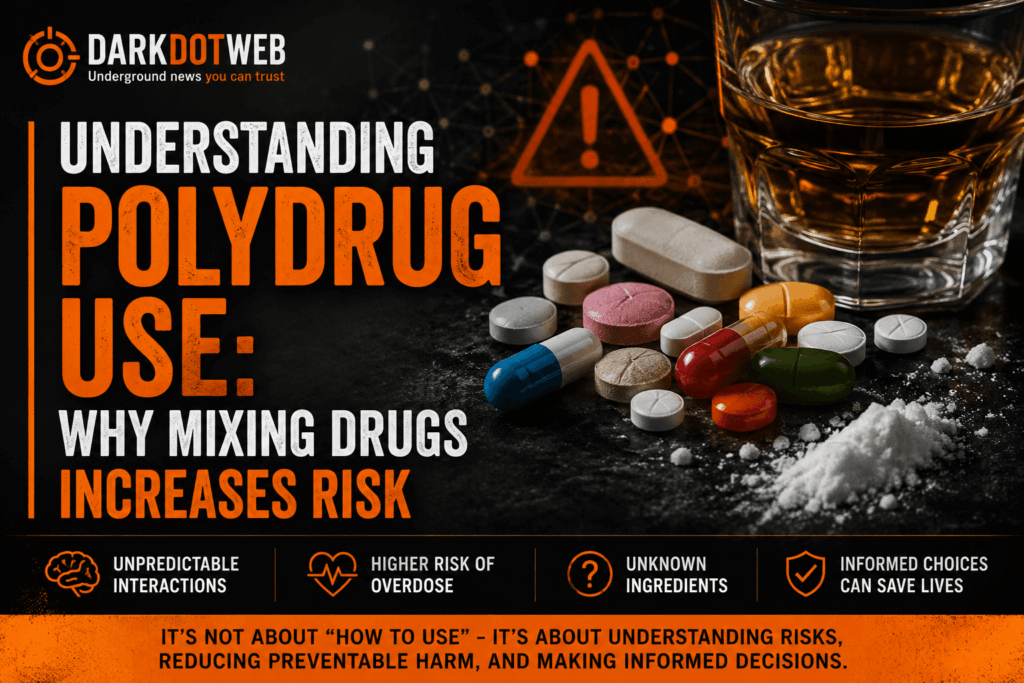
Understanding Polydrug Use: Why Mixing Drugs Increases Risk
Understanding the Hidden Risks of Combining Substances
When people think about drug-related harm, they often focus on a single substance. In reality, many serious medical emergencies involve more than one drug. Whether intentionally or unintentionally, combining substances known as polydrug use can significantly increase the risk of overdose, unpredictable reactions, and other health complications.
Polydrug use doesn’t only refer to mixing illegal drugs. It also includes combining prescription medications, over-the-counter medicines, alcohol, cannabis, and other psychoactive substances. Even when each substance is taken in amounts that might be considered relatively low on its own, their combined effects can become far more dangerous than expected.
Understanding why these interactions occur is an important part of harm reduction. While no amount of drug use is completely without risk, being aware of how substances can interact may help people make more informed decisions and recognize potentially dangerous situations.
What Is Polydrug Use?
Polydrug use refers to the use of two or more psychoactive substances within a period where their effects overlap. This may happen intentionally, such as someone combining alcohol with cannabis, or unintentionally when prescription medication is taken alongside recreational drugs.
Examples include:
- Drinking alcohol while taking prescription sedatives.
- Using cocaine after consuming alcohol.
- Combining opioids with benzodiazepines.
- Taking MDMA while using cannabis.
- Mixing multiple stimulants in the same session.
Many people may not even realize they are engaging in polydrug use, particularly when prescription medications or alcohol are involved.
Why Mixing Drugs Increases Risk
Every psychoactive substance affects the body differently. Some slow down the central nervous system, while others increase heart rate, blood pressure, or body temperature. When multiple substances are combined, these effects can interact in ways that are difficult to predict.
In some cases, one drug can amplify the effects of another. In others, a stimulant may temporarily mask the effects of a depressant, leading someone to consume more than their body can safely tolerate.
Factors that influence these interactions include:
- Individual tolerance
- Age and overall health
- Body weight
- Hydration and nutrition
- Dosage
- Route of administration
- The purity or composition of the substances involved
Because of these variables, no combination can ever be considered completely predictable.
Depressants: One of the Highest-Risk Combinations
Some of the most dangerous drug combinations involve substances that depress the central nervous system.
These include:
- Opioids
- Benzodiazepines
- Alcohol
- Certain prescription sleeping medications
When used together, these substances can suppress breathing, reduce heart rate, and impair consciousness. The combined effects are often much stronger than the effects of either substance alone.
Many fatal overdoses involving opioids also involve another depressant, particularly alcohol or benzodiazepines. This combination greatly increases the risk of respiratory depression, which can become life-threatening without immediate medical attention.
Stimulants Can Create a False Sense of Safety
Combining stimulants with depressants is sometimes mistakenly believed to “balance out” their effects.
In reality, this does not happen.
A stimulant may make someone feel more alert while the depressant continues to affect breathing and other vital functions. This can encourage people to consume more of one or both substances, increasing the risk of overdose once the stimulant begins to wear off.
Similarly, mixing multiple stimulants such as cocaine with amphetamine or MDMA can place significant strain on the cardiovascular system. Increased heart rate, elevated blood pressure, overheating, dehydration, and cardiac complications become more likely.
Timing Matters More Than Many People Realize
Not all dangerous interactions happen because substances are taken at the exact same time.
Many drugs remain active in the body for hours or even days after their noticeable effects fade. Taking another substance later may still result in an interaction if the first drug has not been fully metabolized.
This is particularly important with prescription medications, long-acting opioids, benzodiazepines, and certain antidepressants.
Feeling “sober” does not necessarily mean a substance has completely left the body.
Unknown Ingredients Increase the Risk
One of the biggest challenges with unregulated drugs is uncertainty.
Substances sold as one drug may contain entirely different compounds, unexpected adulterants, or significantly stronger analogues. Counterfeit tablets may resemble legitimate medications while containing completely different ingredients.
Without laboratory testing, it is often impossible to know exactly what has been consumed. This uncertainty makes predicting drug interactions even more difficult.
Drug checking services, where available, can provide valuable information about the identity of a substance, although they cannot guarantee safety or detect every possible contaminant.
Reducing Risk
The only way to completely avoid drug interactions is not to use psychoactive substances. However, harm reduction recognizes that some people may choose to use drugs despite the risks.
If someone decides to use, several measures may help reduce potential harm:
- Avoid combining multiple depressants whenever possible.
- Be cautious when mixing any psychoactive substances.
- Read medication labels and understand potential interactions.
- Avoid increasing doses because another substance appears to reduce the effects.
- Stay hydrated and avoid becoming overheated, particularly with stimulants.
- Use drug checking services when available.
- Never assume a familiar-looking pill contains what it claims.
- Avoid using alone whenever possible so someone can respond in an emergency.
- Carry naloxone if opioids may be involved, where it is legally available.
These measures cannot eliminate risk, but they may reduce the likelihood of serious harm.
Recognizing an Emergency
Immediate medical attention should be sought if someone experiences:
- Difficulty breathing or stopped breathing.
- Blue or gray lips or fingertips.
- Loss of consciousness.
- Seizures.
- Chest pain.
- Extremely high body temperature.
- Inability to wake the person.
When in doubt, treat the situation as a medical emergency. Acting quickly can save a life.
Polydrug use is far more common than many people realize, and it often involves everyday substances such as alcohol or prescription medications rather than only illicit drugs.
Because each substance affects the body differently, combining them can produce unpredictable and sometimes life-threatening effects. Even experienced users cannot reliably predict how different drugs will interact, particularly when unknown ingredients or changing tolerance are involved.
Harm reduction is not about encouraging drug use. It is about understanding risks, recognizing dangerous situations, and providing accurate information that can help reduce preventable harm. The more informed people are about drug interactions, the better equipped they are to make safer decisions and respond appropriately if something goes wrong.
Related articles :
- Harm Reduction : Dangerous Drug Interactions & Combinations
- Naloxone: How It Reverses Opioid Overdoses
- Testing & Drug Checking Resources
- Nasal Care : Harm Reduction Guide
Reports are sourced from official documents, law-enforcement updates, and credible investigations.
Discover additional reports, market trends, crime analysis and Harm Reduction articles on DarkDotWeb to stay informed about the latest dark web operations.